
The conversation at my last physical went something like this. My doctor looked at my knees, pressed a few spots that made me wince, and said my joints showed “mild to moderate” age-related changes. She didn’t recommend surgery. She didn’t push any prescription. She said to keep moving, maintain a healthy weight, and consider anti-inflammatories when the pain got bad enough.
I took ibuprofen a lot last winter. More than I was comfortable with. My stomach started talking back about it. So I went looking for something else — something that might actually address the underlying issue rather than just mute the signal while the problem continued.
I found JointVive after a few weeks of reading. What caught my attention was two things: the liquid format (which reviewers said absorbs faster than capsules), and the 365-day money-back guarantee, which told me the company was confident enough in the product to give customers an entire year to decide. I figured the financial risk was low enough to justify the experiment.
What Is JointVive?
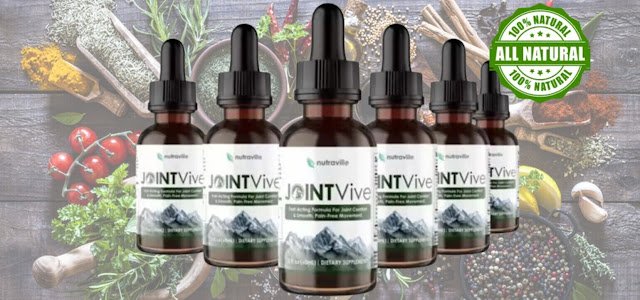
JointVive is a liquid joint supplement made by Nutraville. You take it as drops — one dropper under the tongue or in a glass of water, once daily. That’s it. The liquid format is deliberate: sublingual absorption, meaning the active compounds enter the bloodstream through the tissues under your tongue before reaching the digestive system. For botanical extracts in particular, this can make a real difference because some compounds lose potency when they pass through stomach acid and liver metabolism on the way to capsule absorption.
The formula targets joint pain through three pathways simultaneously: reducing inflammation at the cellular level, defending joint tissues from oxidative stress (free radical damage), and improving circulation to cartilage, which has limited blood supply and needs that flow to receive the nutrients it needs for repair and maintenance.
JointVive is classified as a dietary supplement. It’s non-GMO, stimulant-free, gluten-free, and manufactured in an FDA-registered, GMP-certified facility in the United States. One bottle is meant to last 30 days on the recommended dosage.
The Ingredient Breakdown: What’s Actually Inside
The formula contains nine plant-based ingredients. I spent a fair amount of time looking at the research behind each one before I committed to buying. Here’s what I found — the honest version, not the marketing version.
| Ingredient | What Research Suggests | My Assessment |
|---|---|---|
| Pine Bark Extract | Proanthocyanidins reduce joint inflammation markers. Pycnogenol® studies showed 55% less pain and 53% less stiffness vs. placebo in osteoarthritis patients over 12 weeks. | ⭐ Strongest ingredient — well-studied |
| Spirulina | Blue-green algae with anti-inflammatory phycocyanin. Studies link it to reduced joint discomfort scores and improved glutathione, an enzyme tied to cartilage health. | ⭐ Solid anti-inflammatory support |
| Tamarind | Traditionally used for joint lubrication. Contains compounds that inhibit enzymes responsible for breaking down cartilage tissue. | ⭐ Useful, limited modern studies |
| Ginkgo Biloba | Well-documented for improving peripheral circulation. Better blood flow means better nutrient delivery to cartilage — a tissue that naturally lacks strong blood supply. | ⭐ Logical inclusion, good research |
| Lion’s Mane Mushroom | Best known for nerve health support. A 2022 study showed a 33% reduction in inflammatory markers and improved synovial fluid balance — but joint-specific human trials are still limited. | ⚠️ Promising but early-stage for joints |
| Moringa | Rich in antioxidants and anti-inflammatory compounds. Used widely in traditional medicine across South Asia and Africa for joint comfort and general wellness. | ⚠️ Traditional use solid, clinical gaps exist |
| Neem | Anti-inflammatory and immune-modulating properties. Used in Ayurvedic medicine for joint stiffness for centuries. Modern clinical data on joints specifically is limited. | ⚠️ Supportive role, more evidence needed |
| Chlorella | Nutrient-dense algae. Supports detoxification pathways and provides amino acids important for tissue repair and cartilage maintenance. | ⭐ Good supporting role |
| Bacopa Monnieri | Ayurvedic herb with documented antioxidant and anti-inflammatory properties. May protect cells from inflammation-related damage. | ⚠️ Anti-inflammatory logic is sound |
My honest read: this is not a formula where every single ingredient has ironclad human trial data for joint pain specifically. But the core trio of Pine Bark Extract, Spirulina, and Ginkgo Biloba brings serious research muscle to the formula, and the supporting ingredients all have anti-inflammatory or circulation logic that makes their inclusion reasonable even where the clinical evidence is thinner. It’s a thoughtfully built formula, not a random collection of herbs.
What’s notably absent compared to conventional joint supplements is the glucosamine-chondroitin stack that has dominated shelves for the last 20 years. JointVive takes a botanical, antioxidant-and-circulation approach rather than a structural-cartilage-rebuilding approach. Those are two different philosophies, and for someone like me who’d tried glucosamine capsules for a year without notable results, trying a different mechanism made sense.
My 90-Day Experience: Honest, Month by Month
Month 1Finding the Routine — and a Subtle First Signal
Getting into the habit of taking liquid drops was a slight adjustment from pills, but not a difficult one. I measured a dropper into my morning glass of water every day with breakfast. The drops have a faint, slightly earthy taste that I found inoffensive — my wife tried some and said it tasted “like forest,” which I thought was a fair description.
The first month was mostly patience. My knees didn’t suddenly feel younger. The morning stiffness was still there when I got out of bed. But somewhere around day eighteen, I noticed that the stiffness was clearing faster — not gone immediately upon waking, but working itself out in about ten minutes rather than the twenty-five or thirty it had been taking all winter. Small improvement, but I noted it.
I also stopped reaching for ibuprofen during this month. Not because I was told to, but because I wasn’t pushed to a point where I felt like I needed it. That was meaningful.
Month 2Something Real Started Happening
This was the month I became a genuine believer rather than a cautious optimist. The dog walks that I’d been limiting to about 20 minutes got longer — first to 30, then to 35 minutes, with my dog clearly enjoying the upgrade. The specific sharp ache that I used to get going down the stairs from my second floor — that knee-loading moment that I’d been dreading every morning — became noticeably less intense. It didn’t disappear, but it stopped being something I braced for.
My hip stiffness, which had been the secondary complaint behind my knees, also improved more noticeably in month two than my knees had. I started being able to sit cross-legged on the floor without wincing when I stood up afterward, which sounds like a small thing but felt like a significant return of normal function.
I mentioned the improvement to my daughter — she’s a physical therapist — and she was genuinely curious about the formula. After looking at the ingredient list, she said the pine bark extract was the one she’d most expect to produce real results, and that the ginkgo for circulation made theoretical sense to her. She didn’t dismiss it, which felt like the highest endorsement I was likely to get from someone with her training.
Month 3A Genuine New Baseline
By month three, I had established what I can only describe as a new normal for my joints. Not the normal of my 40s — I’m not delusional about that — but a noticeably better normal than the beginning of this experiment. I was walking 45 to 50 minutes with the dog most days. I’d started a gentle yoga class that a friend had been inviting me to for two years, and I was getting through it without modification on most poses that involved my knees.
I did a little informal pain journal through this process. At the start of week one, I’d have rated my daily joint discomfort at about a 5 or 6 out of 10. By the end of month three, I was averaging a 2 or 3 on ordinary days, with occasional 4s when I’d been especially active. That’s a meaningful improvement in quality of daily life, not a placebo kind of shift.
I used exactly zero doses of ibuprofen during month three. My stomach is happier. My knees are not what they were at 35, but they’re functioning in a way I can work with.
“By month three I’d stopped thinking about my knees first thing in the morning. That sounds like a minor thing. For anyone who’s had joint pain, you know it’s not a minor thing at all — it’s an entire shift in how you wake up and face the day.”
How JointVive Compares to What I’d Tried Before
For context: Before JointVive I had tried, at various points: glucosamine-chondroitin capsules (a full year, minimal noticeable effect), turmeric curcumin supplements (helped slightly but inconsistently), topical diclofenac gel (effective short-term, not practical long-term), and daily ibuprofen (effective, but the GI side effects became unacceptable).
What made JointVive different from the glucosamine-chondroitin experience — which is the gold standard most people start with — is probably the combination of the different mechanism and the liquid delivery format. Glucosamine and chondroitin work by trying to maintain and rebuild cartilage structure. JointVive works by reducing the inflammatory environment that causes the pain and by improving circulation to the cartilage. These are genuinely different approaches, and for someone whose cartilage is already worn rather than acutely damaged, the anti-inflammatory and circulatory approach may simply be more relevant.
The liquid sublingual format is also something I think matters more than I initially expected. I’ve taken plenty of capsule-based supplements that I’d suspect weren’t absorbing well. The drops felt different from day one in terms of how quickly I felt like something had entered my system — difficult to quantify, but consistent over three months.
What I Liked and What I Didn’t
✅ What Genuinely Worked
- Morning stiffness clearing faster by week three
- Sharp stair-descent knee pain significantly reduced
- Hip flexibility noticeably improved by month two
- Eliminated my need for daily ibuprofen
- Dog walks went from 20 to 45+ minutes
- Liquid format is easy and quick to take daily
- 365-day guarantee makes the trial genuinely low-risk
- No stomach upset or side effects throughout
❌ What I’d Want to Know Earlier
- Month one requires patience — don’t quit early
- Only sold online via official website
- Some ingredients have limited joint-specific clinical data
- Proprietary blend — exact milligrams not fully disclosed
- Customer service response times reportedly slow (per other users)
- Not a substitute for medical care in serious joint disease
Who Is JointVive Best Suited For?
Based on my experience, JointVive makes the most sense for adults over 45 dealing with what I’d describe as lifestyle-accumulated joint issues — the stiffness, the aches, the reduced range of motion that comes from years of use rather than from a specific injury or autoimmune condition like rheumatoid arthritis. People who’ve tried glucosamine-chondroitin without satisfying results. People who want a natural alternative to long-term NSAID use. People who are active enough to benefit from improved joint mobility — gardeners, walkers, people who want to keep up with grandchildren, people managing the physical demands of everyday life at 50, 60, or 70.
It’s probably less appropriate as a first choice for people with acute joint injuries, severe osteoarthritis requiring surgical intervention, or inflammatory joint disease that’s being managed medically. In those cases, this supplement isn’t the conversation that needs to happen — that conversation needs to happen with a rheumatologist or orthopedic specialist.
Side Effects and Safety
I had no side effects across the entire three months. Zero. No digestive upset, no allergic response, no interactions with the other supplements I take (vitamin D and omega-3 fish oil). The formula is stimulant-free, so there’s no disruption to sleep or heart rate to worry about.
A few things worth knowing. If you’re taking blood thinners like warfarin or eliquis, some of the botanical ingredients — particularly pine bark extract — have mild anticoagulant properties that could interact. Always disclose this to your prescribing doctor before starting. People with shellfish allergies don’t need to worry here (unlike glucosamine from shellfish sources — JointVive is plant-based throughout). If you’re pregnant or nursing, skip this until you’ve had a conversation with your OB-GYN.
Some users in early weeks report brief mild digestive sensitivity as the body adjusts to the potent botanicals. I didn’t experience this, but if you do, taking the drops with food rather than water alone is worth trying.
Frequently Asked Questions
How long does it take to feel results from JointVive?
Most users notice early signals — faster stiffness clearance, slightly reduced morning discomfort — within two to four weeks. Meaningful improvement in mobility and pain levels typically becomes clear between weeks six and ten. The full effect, including whatever benefit you’ll ultimately get, generally requires a consistent 60 to 90-day commitment. Don’t judge this product on two weeks. That’s not how the ingredients work.
Is JointVive a liquid or a capsule?
It’s a liquid dropper supplement — you take one full dropper daily, either directly under the tongue or stirred into water. This sublingual liquid format is one of the product’s genuine differentiators, as it allows botanical extracts to enter the bloodstream before encountering the full digestive process, potentially improving how much active compound actually reaches joint tissues.
Can I take JointVive if I’m already on joint medication or pain relievers?
Not without checking with your doctor first. Some ingredients have mild blood-thinning and anti-inflammatory properties that could interact with prescription medications. If you’re managing joint disease medically, this is a supplement conversation you should have with your healthcare provider rather than making unilaterally.
Does JointVive work for hips and shoulders, or just knees?
The formula targets systemic inflammation and joint circulation broadly — not joint-specifically. My hip improvement was actually more dramatic than my knee improvement in month two. Multiple users report benefits across different joint locations. The formula isn’t knee-targeted; it supports the body’s joint environment generally.
What does JointVive taste like?
Mildly earthy, faintly herbal. It’s not unpleasant. My wife described it as “forest.” I’ve been mixing it into a small glass of water each morning and find the taste completely manageable. If you’re particularly taste-sensitive, adding it to orange juice might mask it further.
Is the 365-day money-back guarantee real?
Based on what the company states, yes — and it’s one of the longest guarantees I’ve seen on any supplement. A small number of users in other reviews report that processing refunds through customer service took longer than expected. Keep your order documentation just in case. But the existence of a year-long guarantee is meaningful — it’s not something a company offers if they don’t believe the product works for most people.
✅ Final Verdict — Worth It?
Three months in, my answer is yes — with the important caveat that “worth it” assumes you have the patience to give it proper time. The first month tested my commitment. But by month two, I was seeing enough real improvement that continuing felt obvious. By month three, I was living differently in a way that matters to me: more movement, less pain, no daily ibuprofen.
For a 61-year-old with accumulated joint wear and a failed glucosamine experiment in her past, JointVive delivered results that nothing else had. The mechanism is different, the format is different, and apparently for my body, different was what was needed.
Disclaimer: This review reflects one individual’s personal experience over a 90-day period and is written for informational purposes only. It does not constitute medical advice. Results will vary by individual based on health status, severity of joint issues, consistency of use, and lifestyle factors. JointVive is a dietary supplement and has not been evaluated by the FDA to diagnose, treat, cure, or prevent any disease. If you have a diagnosed joint condition, are taking prescription medications, or are being managed by a healthcare professional for joint-related concerns, please consult your doctor before adding any supplement to your routine. The author purchased JointVive independently and received no compensation for this review.