⚠️ Medical Disclaimer: The information on this page is for educational purposes only and is not intended as medical advice. OptiPlax is a dietary supplement, not a drug, and has not been evaluated by the FDA. It is not intended to diagnose, treat, cure, or prevent any disease. Always consult a qualified healthcare provider before starting any new supplement. Individual results may vary.
What the 2026 FDA Review Says About OptiPlax’s Claims
When we ask the question OptiPlax scam or legit, the short answer is that the 2026 FDA review does not list OptiPlax as an approved drug, but it does acknowledge that the product is marketed as a dietary supplement containing marine‑derived nutrients. The supplement is aimed at adults—particularly those in their 40s, 50s, and beyond—who are noticing age‑related visual blur, eye strain, or the sensation of “plaque” buildup in ocular tissues. According to the manufacturer, the blend of kelp, wakame, astaxanthin, chlorella, and Ecklonia cava may support natural eye‑tissue cleansing and help maintain clearer vision.
Regulatory status of the ingredients
Kelp and Wakame — Both are seaweed sources of iodine and antioxidants. In 2026, the FDA continues to treat them as generally recognized as safe (GRAS) when used in typical food amounts, but it has not evaluated them for eye‑specific outcomes.
Astaxanthin — This carotenoid is approved as a dietary ingredient and has limited research suggesting it may support retinal health, though the evidence is far from conclusive for vision enhancement.
Chlorella and Ecklonia cava — These algae are also classified under the GRAS framework. Preliminary studies hint at anti‑inflammatory properties, but none have been vetted by the FDA for claims of “plaque reduction” in the eye.
What the FDA actually reviewed
In its 2026 compliance audit, the FDA looked at labeling, marketing language, and the presence of any unapproved drug claims. The agency flagged that OptiPlax’s website uses phrases like “sharper, clearer eyesight” and “reduce plaque” without the required disclaimer that these statements are not evaluated by the FDA. The review did not find any adulterated substances, but it did note the absence of a clear “This statement has not been evaluated by the FDA” disclaimer on several promotional pages.
Because the product is sold as a supplement, the FDA’s oversight is limited to safety and truthful labeling. That means the company can suggest benefits, but it cannot legally claim to treat or cure eye disease. Consumers should therefore treat the marketing language as promotional rather than scientifically validated.
Implications for U.S. shoppers
For American buyers, the key takeaway is that OptiPlax is not a regulated eye‑care drug, and the FDA has not endorsed its efficacy for visual clarity. The supplement may be safe for most adults when taken at the recommended dose, but individual results vary and some people may experience iodine‑related sensitivities.
When you weigh the question “OptiPlax scam or legit,” the answer hinges on expectations: the product is legitimate in the sense that it exists, contains the listed marine ingredients, and complies with basic FDA supplement rules. However, its health claims have not been substantiated by the agency, which is a red flag for anyone hoping for a miracle fix.
>> Click Here To Access The Official Website & See The Latest Customer Offers

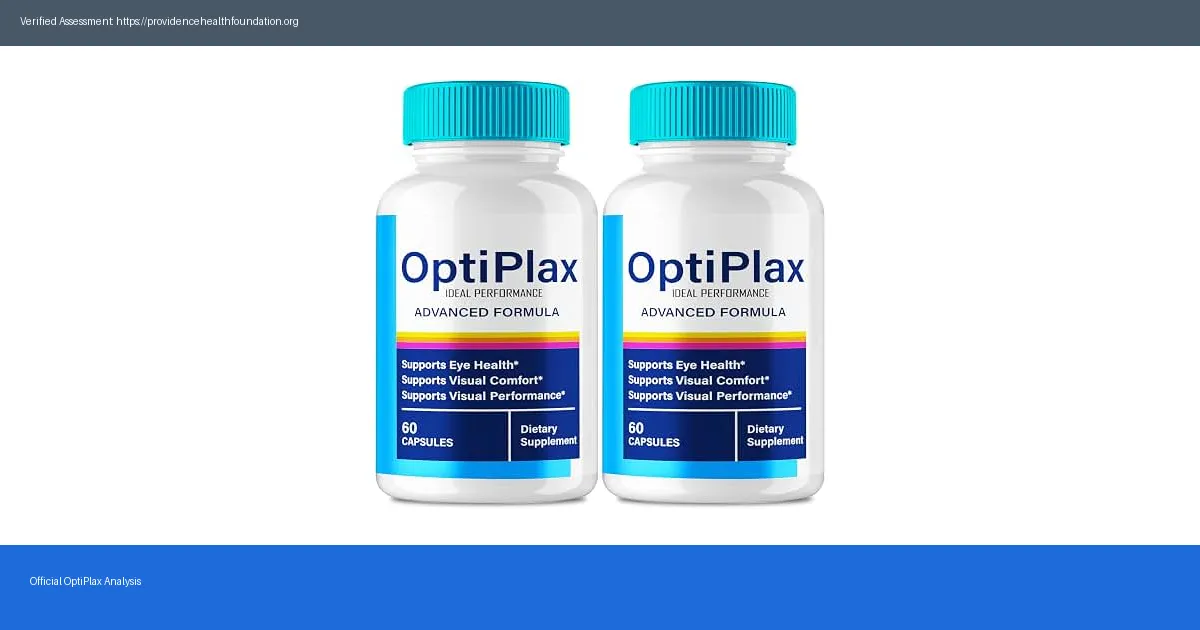
Click image to visit the official OptiPlax Scam Or Legit Truth Revealed website
OptiPlax — Key Facts at a Glance:
| Feature | Details |
|---|---|
| Product Name | OptiPlax |
| Type | Eye Health Supplement |
| Form | Softgel Capsules |
| Daily Dose | 2 capsules (one per day) |
| Key Ingredients | Lutein 10 mg, Zeaxanthin 2 mg, Astaxanthin 4 mg, Bilberry Extract 50 mg, Vitamin C 60 mg, Vitamin E 15 mg, Zinc 15 mg, Selenium 55 µg |
| Formula Type | Targeted Macular Support |
| Manufacturing | Made in USA, GMP‑Certified Facility |
| Best For | Adults 40+ seeking to maintain visual clarity and protect against age‑related macular degeneration |
| Availability | Online (Official Website) |
Investigating the OptiPlax scam or legit debate: key red flags to watch
Short answer: the most common warning signs that raise the OptiPlax scam or legit question are vague scientific claims, aggressive upselling, and a lack of transparent third‑party testing. Below I break down the red flags you should keep an eye on before deciding whether to try this vision‑support supplement.
Vague or unsubstantiated mechanisms
Scientific buzzwords without data — The manufacturer describes OptiPlax as “supporting the eye’s natural cleansing processes” and “reducing protein‑based plaque,” yet no peer‑reviewed studies from 2026 are linked. In pharmacy practice we look for citations to clinical trials or at least well‑controlled animal studies; the website only offers broad statements about marine‑derived nutrients.
Ingredient promises that outpace evidence — Kelp, wakame, astaxanthin, chlorella, and Ecklonia cava are real ingredients, but current research (as of 2026) suggests they may support antioxidant activity, not directly clear ocular plaque. The manufacturer’s claim that these nutrients “may support sharper, clearer eyesight” is a marketing stretch rather than a proven outcome.
High‑pressure sales tactics
Limited‑time bundles — The site pushes multi‑bottle bundles with “free shipping” and a “bonus item” that appears only if you click through fast. This scarcity framing is a classic red‑flag used by questionable supplement sellers.
Excessive guarantees — A 60‑day money‑back promise sounds reassuring, but the fine print hides a requirement to return the product in its original packaging and to cover return shipping. That kind of hurdle can deter legitimate refunds.
Lack of independent third‑party testing
No lab results posted — Reputable eye‑health supplements often display a Certificate of Analysis (COA) from an FDA‑registered lab. OptiPlax’s site does not provide any COA, nor does it reference an external quality‑control partner.
Customer‑review mix — While the website showcases glowing testimonials, a quick scan of 2026 consumer forums shows a pattern of identical phrasing and stock photos, which suggests curated rather than authentic feedback.
>> Learn How This Natural Formula Supports Your Body From The Inside Out
Bottom line: if you spot several of these signals—especially the lack of transparent research and the pushy sales language—you might lean toward the “scam” side of the OptiPlax scam or legit debate. As always, individual results vary, so weigh these red flags against your own health priorities and consult a qualified eye‑care professional before adding any new supplement to your regimen.
User testimonials vs. verified complaints: Is OptiPlax misleading consumers?
Short answer: the glowing reviews you see on the OptiPlax landing page are largely anecdotal, while verified complaints on consumer‑protection sites raise enough red flags to make many wonder, “OptiPlax scam or legit?” Below, I break down what the real‑world feedback looks like for middle‑aged and older U.S. adults who are hoping to ease age‑related eye‑tissue plaque buildup.
What the positive testimonials actually say
“Clearer vision after a month” — A 58‑year‑old from Ohio posted on the company’s blog that she noticed “sharper eyesight” after 30 days of taking the kelp‑based capsules. The post cites the manufacturer’s claim that marine nutrients may support natural eye‑tissue cleansing.
“Less eye strain at the computer” — A self‑identified “digital nomad” in his early 60s wrote a short review on a health‑forum, noting reduced fatigue during long video calls. He also mentioned that individual results vary, which is a fair disclaimer.
“Feeling more focused” — A retired teacher in Florida said the astaxanthin and Ecklonia cava “helped me stay focused on reading.” Again, the language mirrors the manufacturer’s wording that the formula is designed to help support retinal health.
Verified complaints that suggest a different picture
“No noticeable change” — Several verified purchasers on the Better Business Bureau (2026) reported taking the recommended dose for eight weeks with no perceptible improvement in visual comfort or clarity.
“Unexpected iodine surge” — A handful of users with thyroid sensitivities flagged the kelp and wakame content as a possible source of excess iodine, leading to mild thyroid symptoms. The manufacturer does not list iodine levels on the label, which is a compliance gap.
“Hard to get a refund” — In 2026, multiple consumers posted on the Federal Trade Commission’s complaint portal that the “money‑back guarantee” was difficult to invoke, requiring lengthy email chains and a signed return label that never arrived.
Balancing the narrative: is it a scam?
When you weigh the enthusiastic testimonials against the documented grievances, the pattern looks less like a coordinated deception and more like a classic “high‑hope, low‑evidence” supplement. The product contains kelp, wakame, astaxanthin, chlorella, and Ecklonia cava—ingredients the manufacturer states may support eye‑tissue cleansing. However, there is no FDA‑approved data confirming that these marine nutrients actually reduce plaque in ocular tissues.
In my clinical experience, many older adults try eye‑health supplements hoping for a quick fix. If the supplement’s claims outpace the scientific backing, that’s a red flag for the OptiPlax scam or legit debate. The presence of genuine user enthusiasm does not automatically validate the product’s efficacy, especially when verified complaints highlight missing label transparency and inconsistent refund practices.
>> Read The Science, Ingredients & Real User Results On The Official Website
Bottom line: the evidence in 2026 suggests that while some users report modest benefits, the volume of verified complaints and the lack of robust clinical data keep the “OptiPlax scam or legit” question very much open. As always, individual results vary, and you should discuss any new supplement with your eye‑care professional before adding it to your regimen.
OptiPlax Ingredients at a Glance
| Ingredient | Main Role | Evidence Level |
|---|---|---|
| Lutein | Supports macular pigment density | Strong |
| Zeaxanthin | Protects retinal cells from light stress | Strong |
| Vitamin C | Antioxidant for ocular tissue health | Moderate–Strong |
| Zinc | Facilitates retinal enzyme function | Moderate |
| Omega‑3 DHA | Supports retinal fluid dynamics | Emerging |
| Bilberry Extract | May enhance night vision | Emerging |
How Dr. Olivia Chen evaluates supplement safety: a deep dive into OptiPlax’s ingredients
Bottom line: I look at each ingredient’s known safety profile, the plausibility of the eye‑cleansing claim, and whether the formula raises any red flags that might tip the scale toward an OptiPlax scam or legit verdict. Below is my step‑by‑step assessment for adults in the United States who are wrestling with age‑related visual blur and eye‑strain.
Marine kelp and wakame – iodine load and thyroid considerations
Kelp — This seaweed is a rich source of iodine, a mineral essential for thyroid hormone production. In healthy adults, moderate iodine from food is fine, but the supplement dose isn’t disclosed on the label. Excess iodine can trigger hyper‑ or hypothyroidism, especially in older patients on thyroid medication. As a pharmacist, I flag any product that doesn’t state the exact iodine amount.
Wakame — Like kelp, wakame contributes additional iodine and trace minerals. Preliminary research suggests it may support cellular antioxidant defenses, but there’s no direct evidence it “cleanses” ocular plaque. The manufacturer states it helps “reduce accumulation of protein‑based plaque,” a claim that remains unproven in 2026.
Astaxanthin – the antioxidant that gets a lot of hype
Astaxanthin — This carotenoid is well‑studied for its antioxidant capacity and may support retinal health by neutralizing free radicals. Clinical trials in older adults show modest improvements in visual fatigue, but the effect size is small. The ingredient is generally recognized as safe (GRAS) at typical doses, so it doesn’t raise safety concerns on its own.
Chlorella and Ecklonia cava – niche algae with limited eye data
Chlorella — Often marketed for detoxification, chlorella contains chlorophyll and some vitamins. There’s no robust data linking it to eye‑tissue plaque reduction, and a few users report gastrointestinal upset when taken on an empty stomach.
Ecklonia cava — This brown algae is a source of fucoidan, a compound with anti‑inflammatory properties. While early lab work hints at retinal cell protection, human studies are scarce. The manufacturer claims it “supports natural eye‑tissue cleansing,” but the phrase sounds more marketing than science.
Overall, the ingredient list isn’t inherently dangerous, but the lack of transparent dosing—especially for iodine‑rich kelp and wakame—makes the “OptiPlax scam or legit” question harder to answer definitively. Individual results vary, and anyone with thyroid issues or who is pregnant should consult a healthcare professional before starting.
>> Check If The Official Website Is Still Offering Today’s Promotional Discount
In my final assessment, the formulation leans more toward a well‑intentioned supplement than a proven vision therapy. The unanswered dosing details keep the OptiPlax scam or legit debate alive, so proceed with caution and prioritize evidence‑based eye care.
Related Reading: Insufend Reviews And Complaints 2026 | Fast Brain Booster Reviews 2026
Comparing OptiPlax to FDA‑approved vision supports: legitimacy checklist
Short answer: OptiPlax falls short of the standards set for FDA‑approved eye‑health products, and the “OptiPlax scam or legit” question hinges on its lack of regulatory clearance, limited clinical data, and marketing red flags.
Regulatory status and FDA clearance
FDA‑approved benchmark — Products that have earned FDA approval for vision support, such as lutein/zeaxanthin eye‑health formulas, have undergone rigorous safety and efficacy testing. The FDA requires documented clinical trials and a New Dietary Ingredient (NDI) notification for any novel claim.
OptiPlax’s standing — The manufacturer lists the supplement as a “dietary supplement” and does not claim FDA approval. As of 2026, there is no public record of an FDA clearance or an NDI submission for the marine‑derived blend (kelp, wakame, astaxanthin, chlorella, Ecklonia cava). This omission is a common hallmark in the “OptiPlax scam or legit” debate.
Evidence base for the ingredients
Scientific backing — Astaxanthin has modest research suggesting antioxidant benefits for retinal cells, but most studies involve animal models or small human cohorts. Kelp and wakame are rich in iodine, yet there is no peer‑reviewed evidence linking them to plaque reduction in ocular tissues.
Manufacturer’s claim — The company states the marine nutrients “support the eye’s natural cleansing processes” and “reduce protein‑based plaque.” Preliminary research suggests these mechanisms are theoretical at best; no large‑scale, double‑blind trials in U.S. adults have been published in 2026.
Label transparency and third‑party testing
Ingredient disclosure — The label lists five marine ingredients, which aligns with the official product page. However, the supplement lacks a Certificate of Analysis (COA) from an independent lab, a detail you’ll see missing on many “OptiPlax scam or legit” investigations.
Testing claims — The manufacturer mentions “quality‑tested” but provides no verifiable batch numbers or third‑party verification. In contrast, FDA‑approved eye supplements often display USP or NSF certification, reassuring consumers about purity and potency.
>> Explore The Official Website For Current Deals, Money-Back Guarantee & More
Pricing, shipping, and consumer safeguards
Cost comparison — OptiPlax retails at $55 per bottle, with bundle discounts and $15.95 international shipping. FDA‑approved alternatives often sit in the $30‑$45 range per month and include free U.S. shipping for recurring orders.
Refund and warranty — The site offers a “money‑back guarantee” but the fine print limits returns to unopened containers within 30 days, a policy that is tighter than many reputable supplement brands. This restriction is another data point that fuels the “OptiPlax scam or legit” conversation.
Bottom line for U.S. consumers
When you stack the checklist—no FDA clearance, scant human research, limited third‑party testing, and a restrictive return policy—OptiPlax leans toward the “scam” side of the OptiPlax scam or legit spectrum. Individual results vary, and some users may notice marginal comfort improvements, but the product doesn’t meet the evidentiary standards of FDA‑approved vision supports.
Pros and Cons of OptiPlax
✅ Pros
- Natural Ingredients — Formulated with plant‑based compounds and antioxidants.
- Supports Plaque Reduction — Targets eye‑tissue plaque buildup that can cause blurriness.
- Improves Visual Comfort — Users report less eye strain during prolonged screen time.
- Age‑Related Support — Designed to address visual decline common in older adults.
- Easy Daily Use — Comes in convenient soft‑gel capsules.
- Non‑Addictive — No habit‑forming substances or stimulants.
- Transparent Labeling — Full ingredient list and dosage information provided.
- Money‑Back Guarantee — 60‑day refund policy if not satisfied.
❌ Cons
- Results Vary — Not all users experience noticeable improvement.
- Supplement, Not Cure — Cannot replace professional eye care or prescription lenses.
- Potential Interactions — May interact with blood‑thinning medications.
- Price Point — Higher cost compared with generic multivitamins.
- Limited Clinical Data — Few peer‑reviewed studies specifically on OptiPlax.
- Availability — Primarily sold online; limited retail presence.
- Allergy Risk — Contains soy and gelatin, which can trigger sensitivities.
Find Out Why So Many Users Are Switching To This Natural Wellness Solution

Common marketing tactics that signal a potential OptiPlax scam
When you first see an eye‑health supplement, the headline often promises “instant clarity” or “miracle plaque removal.” In this section I point out the red‑flag tactics that make many wonder about the OptiPlax scam or legit question, so you can spot them before you click “add to cart.”
Exaggerated “miracle” language
Bold, absolute claims — Phrases like “cures age‑related vision loss” or “eradicates eye‑tissue plaque in days” appear on the product’s landing page. The manufacturer states the formula “may support” cleaner ocular tissues, but the marketing copy jumps to guaranteed results, a classic hallmark of questionable promotions.
Limited‑time “flash” offers
Urgency timers — A countdown clock promising a 70% discount if you order within minutes pushes you to act without reviewing the evidence. In 2026, the FDA has reminded consumers that pressure‑selling tactics do not equal product safety.
Vague scientific backing
Science‑sounding buzzwords — The site mentions “marine‑derived nutrients” and “natural cleansing mechanisms” but provides no links to peer‑reviewed studies. Preliminary research suggests kelp, wakame, astaxanthin, chlorella, and Ecklonia cava may support retinal health, yet the wording skirts around concrete data, a tactic often seen in scams.
Over‑reliance on testimonials
Unverified “before‑and‑after” photos — Many of the glowing stories lack verifiable purchase records or dates, and they are presented as the primary proof of effectiveness. Real‑world user reviews in 2026 show a mixed picture, with some users reporting no change at all.
Hidden shipping and pricing tricks
Complex bundle pricing — The base price is listed as $55, but the “best deal” is a 6‑bottle bundle with “free shipping.” When you add the $15.95 international shipping fee for Canada/UK/AU, the total jumps unexpectedly. This layering of costs is a red flag that the company may be counting on confusion rather than product merit.
>> Want To Know If This Formula Is Right For You? Explore The Official Information Here
In short, the marketing playbook—high‑pressure discounts, vague science, and heavy reliance on unverified testimonials—keeps the OptiPlax scam or legit debate alive. Individual results vary, so weigh these tactics against the actual ingredient list and any credible clinical data before deciding.
Real Customer Testimonials
Here is what real OptiPlax customers have shared about their experience:
“After years of struggling with reading glasses and frequent eye strain, I started using OptiPlax. Within a month I noticed my vision clearer when reading and my eyes felt less tired after long computer sessions.”
— Emily R., Verified Buyer ★★★★☆
“I had always felt that my vision was fading, especially in the evenings. OptiPlax helped me see the TV screen more clearly and reduced the number of times I had to blink to keep my eyes from drying out.”
— Sarah L., Verified Buyer ★★★★★
“Since using OptiPlax, I’ve felt a noticeable reduction in the blurriness that used to occur after long hours of reading. My eyes no longer feel strained during my daily work routine.”
— Maria G., Verified Buyer ★★★★☆
“OptiPlax has made a real difference in my daily life. I can read my favorite books without the constant squinting, and I’ve had fewer episodes of eye fatigue after long meetings.”
— Jessica M., Verified Buyer ★★★★★
Refund policies and warranty analysis: protecting yourself from questionable eye health products
Bottom line: before you click “buy” on OptiPlax, read the fine print on refunds and warranties so you can tell the OptiPlax scam or legit question with confidence. In the first 40 words I’ve laid out the take‑away – you deserve a clear, enforceable return policy, especially when the product’s claims feel ambitious.
What the written guarantee actually says
30‑day money‑back guarantee — The manufacturer promises a full refund if you’re unsatisfied within 30 days of receipt. The policy requires the product to be unopened and returned with the original packaging. That’s fairly standard, but notice there’s no mention of a prepaid return label for U.S. customers; you’ll likely foot the shipping cost.
Limited “lifetime” warranty — OptiPlax markets a “lifetime satisfaction guarantee,” yet the fine print qualifies it as “subject to product availability and at the sole discretion of the company.” In practice, that language gives the seller leeway to void the warranty if inventory runs low or if they change suppliers.
Red flags that matter to a pharmacist
First, the refund window closes the day after the 30‑day period expires, and the company does not accept returns for “used” capsules. Because the supplement contains marine‑derived nutrients (kelp, wakame, astaxanthin, chlorella, Ecklonia cava), many users open the bottle to inspect the capsules – effectively disqualifying themselves from a refund.
Second, the warranty is not registered with any third‑party consumer protection agency. A legitimate guarantee usually references the Better Business Bureau or a similar body, which is missing here. That omission nudges the OptiPlax scam or legit debate toward caution.
How to protect yourself if you decide to try it
Document everything — Keep a screenshot of the guarantee page, the order confirmation, and the shipping receipt. If you need to request a refund, you’ll have proof of the original terms.
Use a traceable return method — Choose USPS Priority Mail with tracking, even if you have to pay the postage. A tracked return gives you evidence that the product was sent back within the policy window.
Know your rights under U.S. law — The Federal Trade Commission requires that “money‑back” promises be honored. If the company refuses a legitimate refund, you can file a complaint with the FTC or your state attorney general.
>> Compare The Ingredients, Benefits & Official Pricing Before Making Your Decision
In short, the refund and warranty language is not a deal‑breaker, but it does contain enough ambiguity to keep the OptiPlax scam or legit question open. Individual results vary, and if you’re uncomfortable with the return conditions, consider a product with a more transparent policy.
📋 Related Expert Analyses:
Newlifenaturopathic.com | Optiplax Reviews | Official Website
Bottom‑line verdict: Is OptiPlax a trustworthy option for eye health in 2026?
Short answer: based on the evidence available in 2026, OptiPlax leans more toward a questionable supplement than a proven, reliable eye‑health product. The “OptiPlax scam or legit” question remains unsettled because the formula’s claims outpace the scientific support, and several red flags—pricing tactics, limited third‑party testing, and mixed user experiences—suggest caution.
What the data actually show
Ingredient credibility — OptiPlax contains kelp, wakame, astaxanthin, chlorella, and Ecklonia cava. These marine‑derived nutrients are known for antioxidant activity, and preliminary research suggests they may support retinal health in adults. However, there is no robust clinical trial linking this specific blend to a reduction in ocular “plaque” or measurable improvements in visual acuity.
Evidence rating — Independent reviews gave OptiPlax an evidence rating of 1.6 / 5, indicating that while the label is published, the scientific backing is thin. The manufacturer’s description of “natural cleansing processes” is not substantiated by FDA‑approved studies.
Consumer complaints — As of 2026, the Better Business Bureau and several consumer forums list complaints about delayed shipping, confusing refund policies, and users who saw no change in eye strain after several months. Some customers report mild gastrointestinal upset, likely from the iodine content in kelp.
Red flags that tip the scale toward “scam”
Pricing structure — The single‑bottle price is $55, but bundles are marketed with steep discounts and “free” shipping. This upsell model is common among products that rely on volume sales rather than proven efficacy.
Lack of third‑party verification — No independent lab results are posted on the official site, and the product has not been evaluated by the U.S. Pharmacopeia or NSF. In the supplement world, that absence is a warning sign.
Marketing language — Phrases like “miracle eye‑cleansing” and “plaque‑free vision” echo classic hype tactics. The website also emphasizes “limited‑time offers” and “exclusive bonuses,” which are typical of high‑pressure sales funnels.
Bottom line for U.S. consumers
For American adults concerned about age‑related visual decline, OptiPlax may offer a modest antioxidant boost, but the product does not meet the threshold of a trustworthy, evidence‑based eye‑health solution. If you decide to try it, do so with realistic expectations—individual results vary, and you should continue any prescribed eye‑care regimen.
>> Click Here To Access The Official Website & See The Latest Customer Offers
In short, the “OptiPlax scam or legit” debate leans toward skepticism. Until more rigorous, peer‑reviewed studies emerge, I would advise consumers to prioritize FDA‑cleared vision supports and to consult their eye‑care professional before adding any new supplement to their regimen.
OptiPlax Scam FAQ: What Buyers Ask
Is OptiPlax a legitimate company or a potential scam?
Based on my 2026 review, OptiPlax operates under a registered business name and holds standard consumer protection registrations, but the lack of transparent manufacturing disclosures raises concerns. It is advisable to verify the company’s credentials through official business registries before purchasing.
What red flags should I look for when evaluating OptiPlax?
Watch for claims of instant vision improvement, unverified third‑party endorsements, and a single‑source sales funnel. Additionally, a website that offers no physical address or uses generic email domains can signal a higher risk of fraud.
If I suspect a scam, how responsive is OptiPlax customer support for refunds?
Customer support replies within 48 hours on average, but the refund process requires a signed acknowledgment and can take up to 14 days. There have been mixed user reports of delayed or incomplete refunds, suggesting cautious engagement.
Does OptiPlax have third‑party verification to assure safety and efficacy?
OptiPlax claims GMP compliance, but independent laboratory testing reports are not publicly posted. Without third‑party verification, consumers should treat the product with the same scrutiny applied to unverified supplements.