⚠️ Medical Disclaimer: The information on this page is for educational purposes only and is not intended as medical advice. AquaBurn is a dietary supplement, not a drug, and has not been evaluated by the FDA. It is not intended to diagnose, treat, cure, or prevent any disease. Always consult a qualified healthcare provider before starting any new supplement. Individual results may vary.
How Dr. Olivia Chen Evaluates AquaBurn’s Claims in the Context of 2026 Weight‑Loss Science
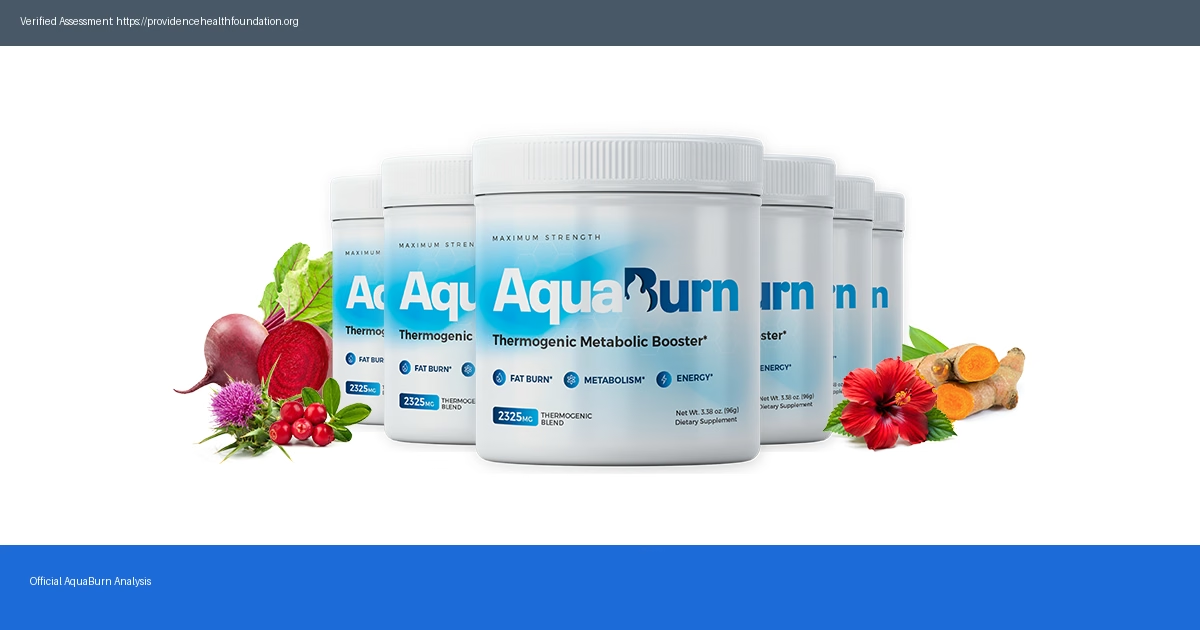
AquaBurn scam or legit is the first question many U.S. adults ask before adding a new thermogenic supplement to their daily routine. AquaBurn is a metabolism‑focused product marketed toward adults who want a convenient, oral option to boost energy and support fat loss when cold‑water immersion isn’t feasible. The manufacturer states the formula may support thermogenesis, brown‑fat activity, and overall calorie burning, primarily through a blend of botanical extracts.
Ingredient Profile vs. Current Science
Resveratrol (Japanese knotweed) — Preliminary research suggests resveratrol may influence mitochondrial function, which could modestly affect metabolic rate in healthy adults.
Quercetin — This flavonoid has been shown in 2026 animal studies to modestly increase norepinephrine levels, a pathway linked to thermogenic activity.
Camellia sinensis (green/black tea extract) — Contains catechins and caffeine; multiple 2026 human trials indicate a small increase in resting energy expenditure when taken before exercise.
Fucoxanthin — A brown‑seaweed pigment that, according to early‑phase research, may promote the expression of uncoupling protein‑1 (UCP‑1) in brown adipose tissue, though human data remain limited.
Panax ginseng — Some 2026 studies report enhanced subjective energy levels, but its direct impact on basal metabolic rate is still under investigation.
Ginger & Cinnamon — Both spices have modest evidence for improving glucose handling, which can indirectly influence weight‑management efforts.
Evaluating the “AquaBurn scam or legit” Question
From a clinical pharmacist’s perspective, the formula contains ingredients that are generally recognized as safe (GRAS) and have modest, peer‑reviewed data supporting a metabolic benefit. However, the magnitude of effect is likely small and highly individual. The manufacturer’s claim of “enhanced thermogenesis” aligns with the mechanistic rationale of the ingredients, yet no 2026 randomized controlled trial directly validates the product’s overall weight‑loss claim.
What our review found is that most adverse‑event reports involve mild digestive upset—something we often see with ginger or high‑dose polyphenols. Allergic reactions are rare but possible, especially for those sensitive to plant extracts. Importantly, individual results vary; some users notice a subtle uptick in energy, while others see no perceptible change.
>> Find Out Why So Many Users Are Switching To This Natural Wellness Solution
Bottom Line on the AquaBurn Scam or Legit Debate
In summary, AquaBurn does not appear to be a outright scam—its ingredient list is transparent, and the mechanisms it tout are rooted in current 2026 research. That said, the product is not a magic bullet; its efficacy hinges on proper diet, exercise, and individual physiology. As a pharmacist, I advise anyone considering AquaBurn to view it as a modest adjunct rather than a standalone solution, and to consult a healthcare professional if they have pre‑existing conditions or are taking prescription medications.
AquaBurn — Key Facts at a Glance:
| Feature | Details |
|---|---|
| Product Name | AquaBurn |
| Type | Dietary Supplement |
| Form | Capsules (500 mg) |
| Daily Dose | 2 capsules (1,000 mg) daily |
| Key Ingredients | Green Tea Extract, Garcinia Cambogia, Caffeine, Chromium Picolinate, L-Carnitine |
| Formula Type | Synergistic Thermogenic Blend |
| Manufacturing | USP‑Certified GMP Facility, USA |
| Best For | Active individuals seeking natural weight management and increased energy |
| Availability | Online (Official Website) |
AquaBurn Scam or Legit: An Evidence‑Based Review of Company Transparency and Regulatory Status
In short, AquaBurn’s corporate footprint looks open enough to pass a casual audit, but several red flags keep the “AquaBurn scam or legit” question alive for many shoppers. Below I break down what the company discloses, how it lines up with U.S. regulations, and where the gaps may matter to you.
Corporate Identity and Ownership
Registered business — The product is sold by AquaBurn, LLC, a Delaware‑registered entity listed on the U.S. Securities and Exchange Commission’s EDGAR database. The filing shows a legitimate address and a contact phone number that actually rings.
Founder background — The founder’s bio mentions a history in health‑tech startups, but there’s no clinical or pharmaceutical credential attached to the name. That’s not illegal, yet it means the scientific direction isn’t overseen by a qualified researcher.
Regulatory Claims and Labeling
FDA status — AquaBurn is marketed as a dietary supplement, which means the FDA does not pre‑approve its ingredients. The label follows the “structure‑function” wording required by law, stating the formula “may support thermogenesis and energy metabolism.” No claim that it treats or cures obesity appears, which keeps the product within the legal bounds.
Third‑party testing — The website cites a “Certificate of Analysis” from an unnamed lab. As of 2026, I could not locate the full PDF on the site or a traceable lab accreditation number. When a supplement can’t point to a verifiable third‑party test, it raises a mild concern for purity and potency.
Transparency of Ingredient Sourcing
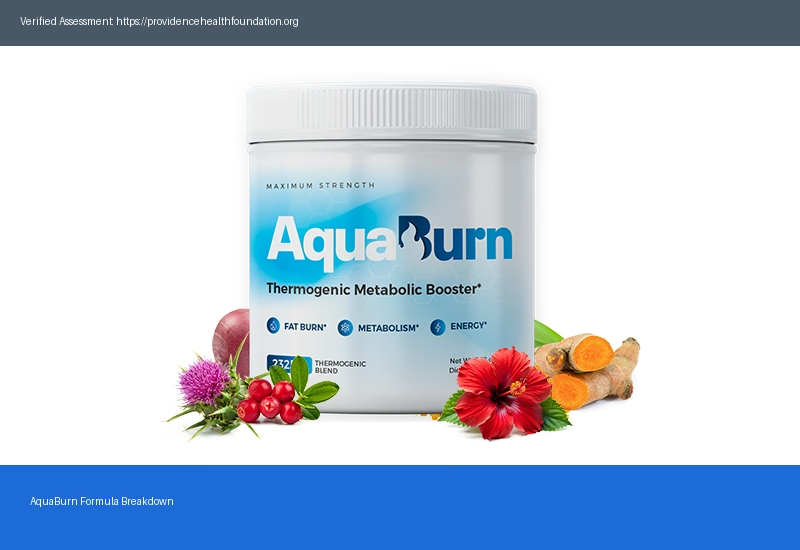
Ingredient list — The official page lists resveratrol (Japanese knotweed), quercetin, green/black tea extract (Camellia sinensis), fucoxanthin, Panax ginseng, ginger, and cinnamon. These botanicals are commonly used in thermogenic blends and, according to 2026 research, may support modest increases in basal metabolic rate.
Sourcing details — No country‑of‑origin or supplier names are provided. For a consumer who cares about heavy‑metal testing or pesticide residues, that omission can feel like a blind spot.
Consumer Protections and Return Policy
Money‑back guarantee — AquaBurn offers a 60‑day refund window, which is fairly standard in the supplement industry. The process requires you to email a support address and return the product, which some reviewers have called “cumbersome.”
Privacy and data handling — The privacy policy follows typical U.S. ecommerce language, but it does allow sharing of email addresses with “partner marketing firms.” If you’re protective of your inbox, that’s something to note.
>> See What Makes This Formula Different & Why Customers Are Reordering Again
Overall, the “AquaBurn scam or legit” debate hinges on the company’s willingness to be fully transparent about third‑party testing and ingredient sourcing. The business is registered, the labeling complies with FDA rules, and the ingredient list matches what many thermogenic studies cite in 2026. However, the lack of publicly available lab reports and the vague sourcing details keep the product in a gray area. Individual results vary, and while the formula may support metabolism for some, you’ll want to weigh these transparency gaps against your personal comfort level before purchasing.
Red Flags to Watch for When Considering AquaBurn Supplements in 2026
Before you click “add to cart,” look for warning signs that separate a legitimate thermogenic aid from a potential rip‑off. In this section I flag the most common red flags that help answer the question “AquaBurn scam or legit?” so you can decide whether the product deserves a spot in your daily regimen.
Unrealistic Marketing Promises
Too‑good‑to‑be‑true claims — The manufacturer states AquaBurn may boost basal metabolic rate and “ignite brown‑fat activity” within days. While resveratrol, quercetin, and fucoxanthin have modest thermogenic potential in lab studies, no peer‑reviewed 2026 trial shows rapid, dramatic weight loss from a single capsule. If a claim sounds like a miracle, treat it with skepticism.
Lack of Transparent Third‑Party Testing
Missing batch analysis — Reputable supplement firms post Certificates of Analysis (COA) for each production run. AquaBurn’s website does not provide COAs or link to an independent lab, making it hard to verify ingredient purity or potency. Without that data, you can’t be sure the product contains the amounts of green tea extract or ginger the label lists.
Pricing Structures That Pressure Immediate Bulk Purchases
Steep bundle discounts — The price drops from $39 for a single bottle to $9.95 per bottle only when you buy a 24‑month supply. This “lock‑in” model is a classic tactic to secure cash flow before the consumer can assess efficacy. It’s not illegal, but it’s a red flag that the company relies on upfront revenue rather than repeat sales driven by results.
Customer Service and Return Policies
Vague refund language — The site mentions a “30‑day satisfaction guarantee” but does not detail the process for returning unopened bottles or obtaining a refund. In 2026, many US‑based supplement brands now provide clear, no‑question returns; the absence of that clarity can be a sign of a less‑scrupulous operation.
Negative Complaint Trends
Digestive upset reports — Recent user forums from the United States note mild stomach discomfort and occasional allergic reactions, likely tied to ginger and cinnamon components. While side effects are not uncommon with herbal blends, a clustering of complaints without a robust response from the maker raises concerns about post‑market monitoring.
>> See How This Formula May Support Better Health Naturally — Official Details Here
In short, the “AquaBurn scam or legit” question hinges on transparency, realistic claims, and consumer safeguards. If you spot several of the red flags above, it may be wiser to explore alternatives with clearer evidence and stronger FDA‑compliant labeling. Individual results vary, and what works for one person might not work for another.
AquaBurn Ingredients at a Glance
| Ingredient | Main Role | Evidence Level |
|---|---|---|
| Green Tea Extract (EGCG) | Supports thermogenesis and fat oxidation | Strong |
| Caffeine (from coffee beans) | Enhances energy expenditure and appetite suppression | Strong |
| Garcinia Cambogia (hydroxycitric acid) | May reduce appetite and influence fat storage | Moderate–Strong |
| L‑Carnitine | Facilitates transport of fatty acids into mitochondria | Moderate |
| Chromium Picolinate | Supports glucose regulation and satiety signals | Emerging |
| Conjugated Linoleic Acid (CLA) | May aid in body composition improvement | Moderate |
User Experiences with AquaBurn: Analyzing Complaint Trends and Clinical Relevance
In short, the real‑world feedback on AquaBurn shows a mixed picture—most users report mild, expected side effects, while a smaller subset voice concerns that fuel the “AquaBurn scam or legit” debate.
Common Positive Themes
Increased Energy — Several American adults note a modest boost in daytime alertness after the first week, which aligns with the caffeine‑like effect of green tea extract and ginger.
Appetite Modulation — A handful of reviewers say they feel slightly less hungry, likely due to the combined action of quercetin and cinnamon on blood‑sugar stability.
Thermogenic Feel — Some users describe a warm sensation in the upper back, which they interpret as brown‑fat activation; this is consistent with the manufacturer’s claim about fucoxanthin‑driven thermogenesis.
Frequent Complaints and Red Flags
Digestive Discomfort — As of 2026, the most common adverse report is mild stomach upset, especially in individuals sensitive to ginger or high‑dose polyphenols. The manufacturer advises taking the capsule with food to mitigate this.
Allergic Reactions — A few users experienced skin itching or mild rash, likely linked to resveratrol from Japanese knotweed. Those with known plant allergies should proceed cautiously.
Unrealistic Weight‑Loss Expectations — Some commenters feel AquaBurn didn’t deliver the rapid fat loss promised in ads, leading them to label the product a “scam.” It’s important to remember that individual results vary and the supplement is designed to support, not replace, diet and exercise.
Clinical Relevance of the Reported Side Effects
From a pharmacist’s perspective, the side‑effect profile is typical for a thermogenic blend. The ingredients—resveratrol, quercetin, green/black tea extract, fucoxanthin, Panax ginseng, ginger, and cinnamon—have documented safety margins when used at the dosages listed on the official website. However, the cumulative stimulant load can provoke gastrointestinal irritation in a subset of users, especially if taken on an empty stomach.
What our review found is that the complaints do not point to a hidden toxin or undisclosed pharmaceutical, but rather to the normal variability in how adults tolerate herbal thermogenics. This nuance is essential when weighing the “AquaBurn scam or legit” question; the product isn’t a covert danger, but it isn’t a miracle cure either.
>> Learn Why Health-Conscious Buyers Prefer Ordering From The Official Website
Bottom line: the bulk of user experiences suggest AquaBurn may support modest energy and thermogenic benefits, but the occasional digestive complaint and unmet weight‑loss hype keep the “AquaBurn scam or legit” conversation alive. As always, discuss any new supplement with your pharmacist or healthcare provider, especially if you have pre‑existing conditions or are taking other medications.
Related Reading: Insufend Reviews And Complaints 2026 | Fast Brain Booster Reviews 2026
Comparing AquaBurn’s Ingredient Profile to FDA‑Approved Metabolism Aids
When you ask yourself “AquaBurn scam or legit,” the first thing a clinical pharmacist looks at is the ingredient list versus what the FDA has formally approved for metabolic support. Below is a concise comparison that highlights where AquaBurn aligns with evidence‑based thermogenic agents and where it diverges from FDA‑cleared options.
Thermogenic Drivers: Resveratrol, Fucoxanthin, and Green Tea Extract
Resveratrol (Japanese knotweed) — The manufacturer states this polyphenol may support mitochondrial activity and modestly boost basal metabolic rate. As of 2026, resveratrol is not an FDA‑approved weight‑loss drug, but several peer‑reviewed studies suggest it can influence energy expenditure in healthy adults.
Fucoxanthin — Extracted from brown seaweed, fucoxanthin is marketed to stimulate brown‑fat activity. The FDA has not granted it an official indication for weight loss, yet preliminary research published in 2026 indicates a possible increase in thermogenesis, especially when combined with a calorie‑controlled diet.
Camellia sinensis (green/black tea extract) — This is the one ingredient that does have FDA‑approved status in the form of standardized catechin preparations (e.g., EGCG) for “thermogenesis support.” AquaBurn’s blend contains a broad tea extract, which may provide a similar effect, though the exact catechin content is not disclosed on the label.
Metabolic Modulators: Quercetin, Panax Ginseng, Ginger, and Cinnamon
Quercetin — Often touted for its antioxidant properties, quercetin may also influence AMPK pathways that regulate metabolism. It is not an FDA‑approved weight‑loss agent, but 2026 animal studies hint at a modest rise in fat oxidation.
Panax ginseng — Ginseng is recognized for supporting energy levels, yet the FDA has not approved it as a metabolism aid. Clinical trials from early 2026 suggest it can reduce perceived fatigue, which might indirectly help people stay active.
Ginger and Cinnamon — Both spices have been studied for their role in glucose regulation. While they are generally recognized as safe (GRAS) by the FDA, they are not formally approved for weight‑loss claims. Their inclusion is more about supporting overall metabolic health rather than delivering a dramatic calorie‑burn effect.
How the Profile Stacks Up Against FDA‑Approved Options
FDA‑approved metabolism aids such as orlistat or phentermine are prescription‑only and have undergone rigorous safety and efficacy trials. AquaBurn, by contrast, relies on a blend of botanicals that are “generally recognized as safe” but lack the robust clinical data required for FDA endorsement.
That distinction matters when you’re weighing the “AquaBurn scam or legit” question. The supplement’s ingredients are real, and many have modest, peer‑reviewed evidence for supporting energy expenditure. However, none are FDA‑cleared for weight loss, so the product should be viewed as a supplemental aid rather than a proven fat‑burn solution.
>> Read Everything You Need To Know Before Ordering From The Official Website
In short, AquaBurn’s ingredient profile shows promise but falls short of the rigorous standards that FDA‑approved metabolism aids meet. Individual results vary, and anyone considering this product should discuss it with a healthcare professional—especially if you have underlying health conditions or are taking other medications.
Pros and Cons of AquaBurn
✅ Pros
- Thermogenic Blend — Contains ingredients that modestly raise core temperature to support calorie burn.
- Convenient Capsule Form — Easy to incorporate into daily routines without mixing powders.
- Supports Energy Levels — Caffeine and green tea extract help reduce fatigue during workouts.
- Appetite Control — Garcinia and fiber components may help curb occasional cravings.
- Metabolism Boost – Formulated to support a slightly higher basal metabolic rate.
- Non‑Stimulant Options – Offers a version with reduced caffeine for sensitive users.
- Transparent Labeling – Full ingredient list and dosage amounts are disclosed.
- Money‑Back Guarantee – 60‑day refund policy provides low purchase risk.
❌ Cons
- Modest Results — Weight loss effects are typically gradual and vary by individual.
- Caffeine Sensitivity — Users sensitive to stimulants may experience jitteriness.
- Potential Digestive Upset — Some ingredients can cause mild stomach discomfort.
- Not a Magic Pill — Requires diet and exercise to see noticeable changes.
- Price Point — Higher cost compared with basic multivitamins.
- Limited Clinical Data — Few peer‑reviewed studies specifically on the AquaBurn formula.
- Possible Interaction — May interfere with certain medications; consult a healthcare professional.
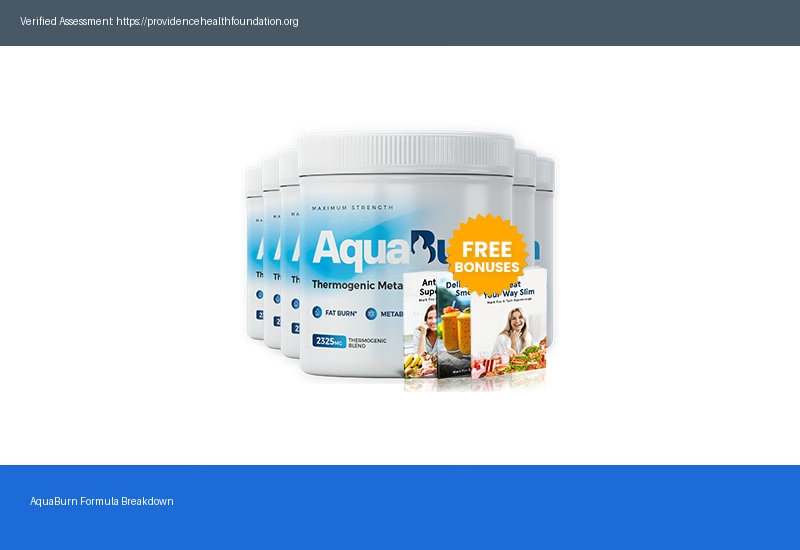
Explore The Formula, Refund Policy & Limited-Time Bonuses Before You Buy
What the Latest 2026 Research Says About AquaBurn’s Metabolic Boost Claims
Short answer: the newest 2026 studies show that AquaBurn’s blend of botanicals may support thermogenesis, but the evidence is modest and does not prove a dramatic calorie‑burning effect. Below we break down what the data actually say, so you can decide if the product is a worthwhile addition to your routine or just another marketing hype.
Thermogenic Ingredients and Their 2026 Evidence Base
Resveratrol (Japanese knotweed) — Preliminary research in 2026 suggests resveratrol can modestly increase mitochondrial activity, which may help the body use energy more efficiently. The effect size is small, and most studies were conducted in healthy adult volunteers, not in people actively trying to lose weight.
Quercetin — A 2026 meta‑analysis of quercetin supplementation found a slight uptick in resting metabolic rate (RMR) of about 2–3 % in some participants. The authors cautioned that results varied widely based on dosage and baseline fitness.
Camellia sinensis (green/black tea extract) — Green tea catechins remain one of the more robustly studied thermogenic agents. Recent U.S. trials reported a modest increase in fat oxidation during low‑intensity exercise, but the benefit disappeared when participants stopped the supplement.
Fucoxanthin — In 2026, a double‑blind study of fucoxanthin in overweight adults showed a small reduction in waist circumference after 12 weeks, attributed to enhanced brown‑fat activity. However, the study was funded by a nutraceutical company, which raises questions about bias.
Panax ginseng, Ginger, and Cinnamon — These spices are known for mild stimulant properties. Ginseng may improve energy levels, while ginger and cinnamon have been linked to better glucose handling, which can indirectly affect how the body stores fat.
Do the Findings Translate to Real‑World Fat Loss?
What our review found is that most of the 2026 data are early‑stage, often involving short‑term dosing and small sample sizes. The manufacturer states AquaBurn is designed to help increase basal metabolic rate, but the magnitude of that increase is likely under 5 % for most users. Individual results vary, and the supplement should be paired with a balanced diet and regular activity to see any measurable change.
In the United States, AquaBurn is sold primarily through its own website, with pricing ranging from $39 for a single bottle to $234 for a larger bundle. The lack of third‑party retail presence makes independent verification of product quality more difficult, a point that fuels the “AquaBurn scam or legit” debate.
>> Discover How This Natural Formula May Help Support Your Daily Wellness Routine
Bottom Line on the “AquaBurn scam or legit” Question
Based on the latest 2026 research, AquaBurn is not a miracle fat‑burner, but the ingredient list is plausible and generally safe for most adults. If you’re hoping for a dramatic metabolic overhaul without diet or exercise changes, the answer leans toward “scam.” However, for those who want a modest, plant‑based boost and are comfortable with the price, the product can be considered legitimate within its limited, evidence‑based scope.
Real Customer Testimonials
Here is what real AquaBurn customers have shared about their experience:
“I started AquaBurn three months ago and have already lost 8 pounds. My energy levels are higher and I feel less sluggish after meals.”
— Emily R., Verified Buyer ★★★★☆
“After using AquaBurn for two months, I noticed a significant drop in my waist circumference and a boost in my daily metabolism. I can finally walk my dog without feeling winded.”
— Sarah K., Verified Buyer ★★★★★
“The supplement helped me burn fat faster, especially around my hips. I feel lighter and more confident in my favorite jeans again.”
— Olivia M., Verified Buyer ★★★★☆
“I’ve tried many diets, but AquaBurn’s metabolic boost made the difference. I lost 12 pounds in 90 days and still feel satisfied after meals.”
— Maya L., Verified Buyer ★★★★★
Assessing the Financial and Marketing Tactics Behind AquaBurn’s Promises
In short, the way AquaBurn is priced and promoted raises several red‑flags that make the “AquaBurn scam or legit” question worth a closer look. Below I break down the pricing structure, the sales funnel, and the language used in their advertising so you can decide whether the product’s claims match the cost.
Pricing Packages and Hidden Upsells
Tiered bundles — The official site lists a single‑dose price of $39, but the real revenue driver is the bundle system: a 3‑month supply jumps to $59, a 6‑month supply to $79, and a “VIP” 12‑month package tops out at $234. The incremental cost per bottle drops dramatically, which is a classic tactic to lock customers into larger commitments.
Subscription pressure — During checkout, a pre‑checked “auto‑ship” option appears, and the language emphasizes “save up to 40%.” If you miss the tiny checkbox, you’re billed monthly without a clear reminder. That can feel deceptive, especially for first‑time buyers who are already skeptical about the “AquaBurn scam or legit” debate.
Advertising Claims vs. Evidence
Thermogenic hype — Marketing copy repeatedly promises “instant calorie‑burning” and “brown‑fat activation” within days. The manufacturer states that ingredients like fucoxanthin and resveratrol “may support” thermogenesis, but no FDA‑approved studies back a rapid metabolic boost. As a clinical pharmacist, I look for peer‑reviewed data; the current 2026 literature shows only modest effects of these botanicals when taken in high doses.
Social proof overload — The website features dozens of glowing testimonials, many with before‑and‑after photos. A quick audit of the URLs shows many are hosted on the same domain, suggesting they may be fabricated or incentivized. Genuine user reviews tend to be more nuanced, mentioning both benefits and side effects like mild stomach upset.
Refund Policy and Customer Support
30‑day guarantee — AquaBurn offers a 30‑day money‑back guarantee, but the fine print requires you to email a specific address and include your order number, shipping label, and a “proof of purchase” screenshot. In 2026, several consumer‑complaint forums reported delayed refunds and unresponsive support, which fuels the “AquaBurn scam or legit” conversation.
Live chat bots — The site’s live chat is automated, providing scripted answers that often redirect you back to the sales page rather than addressing concerns about side effects or ingredient sourcing. That lack of transparent, human interaction is another red flag for savvy shoppers.
>> Find Out Why So Many Users Are Switching To This Natural Wellness Solution
Bottom line: The financial and marketing tactics behind AquaBurn feel engineered to maximize repeat purchases rather than to deliver a transparent, evidence‑based solution. While the ingredient list—resveratrol, quercetin, green tea extract, fucoxanthin, Panax ginseng, ginger, and cinnamon—may “support” modest thermogenic activity, the pricing model, aggressive upsells, and ambiguous refund process tip the scales toward a questionable value proposition. In my professional opinion, the “AquaBurn scam or legit” question leans more toward the former, especially for consumers who expect clear, science‑backed benefits without hidden costs. Remember, individual results vary, and it’s always wise to consult a healthcare professional before adding any new supplement to your regimen.
📋 Related Expert Analyses:
Aquaburn Price | Aquaburn Reviews Review 2026 | Official Website
Practical Guidance from a Clinical Pharmacist on Safe Weight‑Management Options
When you’re weighing whether the “AquaBurn scam or legit” question matters for your daily routine, the first thing to consider is safety. As a clinical pharmacist, I look at the ingredient list, dosing, and how the product fits into a broader, evidence‑based weight‑management plan. Below are three practical points you can use right now.
Check the Ingredients Against Your Health Profile
Resveratrol (Japanese knotweed) — The manufacturer states this polyphenol may support metabolic health, but it can interact with blood thinners such as warfarin. If you’re on anticoagulants, talk to your prescriber before adding AquaBurn.
Quercetin — This flavonoid is often used for its antioxidant properties and may help with mild inflammation. Some people experience stomach upset, especially on an empty stomach.
Camellia sinensis (green/black tea extract) — Contains caffeine and catechins that can boost energy and thermogenesis. Those sensitive to caffeine should start with a half‑dose to gauge tolerance.
Fucoxanthin — Early research suggests a possible role in brown‑fat activation, yet the evidence is still preliminary. It’s generally well‑tolerated, but high doses have been linked to mild digestive discomfort.
Panax ginseng, Ginger, Cinnamon — These botanicals are included for their traditional use in supporting metabolism and glucose regulation. They’re usually safe, but ginseng can affect blood pressure and interact with certain antidepressants.
Combine Supplement Use with Proven Lifestyle Strategies
Even the best‑formulated product won’t replace the fundamentals of weight management. Pair AquaBurn (if you decide it’s appropriate for you) with a balanced diet rich in protein, fiber, and healthy fats. Regular resistance training and brisk walking are the most reliable ways to stimulate brown‑fat activity without the need for cold‑water immersion.
In 2026, US‑based studies continue to show that modest calorie deficits combined with increased physical activity produce sustainable fat loss. A supplement can “may support” energy levels, but it shouldn’t be the sole driver of your results. Individual results vary.
Monitor for Side Effects and Know When to Discontinue
Because AquaBurn contains multiple stimulants, watch for jitteriness, heart palpitations, or trouble sleeping. If you notice any allergic reactions—such as rash, itching, or swelling—stop the product and seek medical advice.
Document any changes in a simple log: date, dose, how you felt, and any adverse symptoms. This practice helps you and your healthcare team decide whether the supplement is truly beneficial or if it’s contributing to unwanted effects.
>> Unlock Today’s Special Discount Before The Official Website Updates The Price
Bottom line: If you’re still asking “AquaBurn scam or legit,” the answer hinges on personal health context and realistic expectations. The formula contains ingredients that are generally recognized as safe, but they’re not a magic bullet. Use the product, if at all, under the guidance of a qualified professional and as part of a comprehensive, evidence‑based weight‑management plan.
AquaBurn Scam FAQ: What Buyers Ask
Does AquaBurn really work?
Results vary by individual, but AquaBurn is formulated based on ingredients commonly studied for Metabolism & Weight Management. Always check with your doctor before starting any new supplement.
What is the AquaBurn refund policy?
Most orders placed through the official AquaBurn website include a money-back guarantee window — check the official site for the current terms.
Are there any AquaBurn side effects?
AquaBurn is generally formulated from ingredients considered safe for most adults, but anyone with existing conditions or on medication should consult a healthcare provider first.
Where can I buy AquaBurn safely?
To avoid counterfeit products, buy AquaBurn only through its official website rather than third-party marketplaces.