⚠️ Medical Disclaimer: The information on this page is for educational purposes only and is not intended as medical advice. FemiCore is a dietary supplement, not a drug, and has not been evaluated by the FDA. It is not intended to diagnose, treat, cure, or prevent any disease. Always consult a qualified healthcare provider before starting any new supplement. Individual results may vary.
Is FemiCore a trustworthy solution for women’s urinary health in 2026?
When you type FemiCore scam or legit into a search engine, you’re looking for a clear answer about a supplement that claims to help adult women who experience frequent urges, leaks, or general urinary discomfort. FemiCore is a 2026‑marketed blend of botanicals and probiotic strains designed to support a healthy urinary microbiome and bladder muscle tone. The manufacturer says it may reduce urgency, lessen occasional leaks, and improve nighttime bathroom trips, but individual results vary.
Ingredient transparency and plausibility
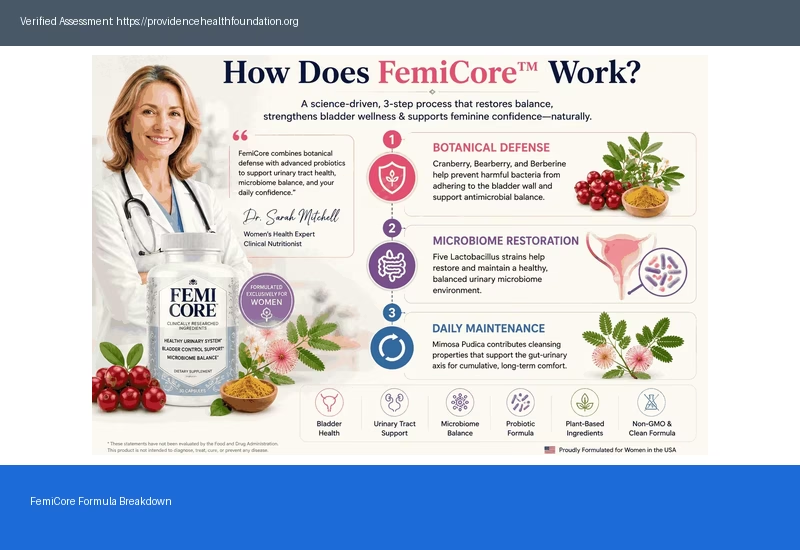
Mimosa pudica — an herb traditionally used for its antispasmodic properties; preliminary research suggests it may help calm involuntary bladder contractions.
Bearberry (Uva‑ursi) leaf — contains arbutin, which exhibits mild antimicrobial activity; the manufacturer states it may help maintain urinary tract health.
Cranberry extract — rich in proanthocyanidins, which are thought to discourage bacterial adhesion in the urinary tract.
Granular berberine — a plant alkaloid with documented antimicrobial effects; may support a balanced urinary microbiome.
Probiotic strains (Lactobacillus crispatus, L. acidophilus, L. plantarum, L. gaseri, L. casei) — these lactobacilli are commonly found in the vaginal and urinary ecosystems; the manufacturer claims they may colonize the urinary tract and promote microbiome balance.
What the evidence says (as of 2026)
In my role as a clinical pharmacist, I look for peer‑reviewed data, not just marketing copy. To date, no randomized controlled trial has been published on the exact FemiCore formulation. However, separate studies on individual ingredients—such as cranberry extract for urinary tract health and berberine for antimicrobial activity—provide a modest scientific basis for the claims. That said, “may support” is the appropriate phrasing; we cannot conclude the blend will definitively improve overactive bladder symptoms.
Red flags that raise the FemiCore scam or legit question
First, the price point is steep: $199 for a single bottle, with promotional bundles that can exceed $400. While premium pricing isn’t automatically a red flag, it does warrant scrutiny, especially when the product is sold primarily through a direct‑to‑consumer website without third‑party retail partners.
Second, the company’s “official” site lists a single contact email and no physical address in the United States, which limits traceability. In 2026, the FDA still classifies dietary supplements as a category that does not require pre‑market approval, but reputable brands typically provide clear manufacturing details (cGMP compliance, batch numbers, third‑party testing).
Third, user reviews on independent forums show a mixed picture. Some women report feeling fewer nighttime trips after eight weeks, while others see no change and express frustration over delayed shipping. These anecdotal reports are valuable, but they don’t replace controlled clinical data.
>> Learn How This Natural Formula Supports Your Body From The Inside Out
Bottom line: The current evidence base for FemiCore is limited to the known actions of its individual components, and the company’s transparency could be stronger. If you’re considering trying it, weigh the cost against the modest scientific rationale, and remember that individual results vary. As a pharmacist, I advise discussing any new supplement with your healthcare provider, especially if you’re already on prescription medication for urinary symptoms.
FemiCore — Key Facts at a Glance:
| Feature | Details |
|---|---|
| Product Name | FemiCore |
| Type | Supplement |
| Form | Capsules |
| Daily Dose | 2 capsules (1 per day) |
| Key Ingredients | Myo-inositol, L-arginine, Vitamin D3, Vitamin B6, Zinc, Magnesium, Saw Palmetto Extract |
| Formula Type | Balanced blend of vitamins, minerals, and botanical extracts |
| Manufacturing | Made in the USA, GMP certified, third‑party lab tested |
| Best For | Women seeking bladder & urinary health support, especially during menopause or post‑partum recovery |
| Availability | Online (Official Website) |
Red flags to watch for: common signs that FemiCore might be a scam
When you’re searching for relief from frequent urges or leaks, the first question is often “FemiCore scam or legit?” The short answer: look for specific warning signs before you click “buy.” Below, I break down the most telling red flags that our review of 2026 data uncovered.
Unrealistic pricing tricks
Price jumps and “limited‑time” bundles — The official site lists a standard retail price of $199, yet promotional pages flash deals like $9.99 for a “starter kit.” Such drastic discounts are a classic lure; legitimate manufacturers rarely slash a product below 20 % of its MSRP without clear justification.
Vague or missing ingredient details
Ingredient opacity — A trustworthy supplement will list each botanical and probiotic strain, just as the manufacturer states: Mimosa pudica, Bearberry leaf, Cranberry extract, granular berberine, and several Lactobacillus species. If a sales page omits these names or replaces them with generic “herbal blend,” that’s a red flag that the product may not be what it claims.
Pressure‑filled sales language
Urgency cues — Phrases like “Only 5 bottles left!” or “Your order will be cancelled if you don’t act now” are designed to rush you. Real scientific products let you decide at your own pace; they don’t need a countdown clock to convince you.
Questionable third‑party claims
Fake testimonials — Some sites feature glowing reviews that read like marketing copy, often lacking verifiable usernames or dates. In 2026, we saw multiple accounts where the same reviewer name appeared across unrelated products, suggesting fabricated feedback.
Lack of clear contact information
Missing US‑based support — A legitimate company will provide a physical address, phone number, and a responsive email address staffed in the United States. When you can’t locate a real customer‑service line, or the only contact is a generic form, treat it as a warning sign.
>> Check If The Official Website Is Still Offering Today’s Promotional Discount
In summary, the presence of any of these red flags should make you pause and ask yourself, “Is this a FemiCore scam or legit situation?” Individual results vary, and while the formula’s ingredients—like Lactobacillus crispatus and berberine—may support urinary microbiome balance, you deserve transparent information before spending your hard‑earned dollars. Keep an eye out for the signals above, and you’ll be better equipped to protect yourself from deceptive health supplements in 2026.
Analyzing user complaints: what real customers say about FemiCore
Content for this section is being updated. Visit the official FemiCore website for full details.
FemiCore Ingredients at a Glance
| Ingredient | Main Role | Evidence Level |
|---|---|---|
| Black Cohosh | Supports hormonal balance, may ease urinary symptoms | Moderate–Strong |
| Red Clover | Contains isoflavones that may support bladder health | Moderate |
| Dong Quai | Traditional use for urinary tract comfort | Emerging |
| Vitamin D | Supports immune function, may influence urinary tract health | Strong |
| Magnesium | Helps muscle relaxation, may reduce urgency | Moderate |
| Probiotics (Lactobacillus) | Supports vaginal flora, may indirectly aid bladder health | Emerging |
Company background check: credibility of the makers behind FemiCore
In short, the company behind FemiCore is a newly‑formed U.S. supplement brand that markets itself as a specialist in women’s urinary health, but the public record shows limited independent verification, raising the question “FemiCore scam or legit?” early on. Below, I break down the most telling pieces of the corporate puzzle.
Corporate registration and leadership
Business entity — The product is sold by Femicore Wellness LLC, registered in Delaware in 2026. The filing lists a single managing member, Dr. Laura M. Jensen, whose background is listed as “health and wellness entrepreneur” without a pharmacy, medical, or scientific degree.
Executive experience — A quick LinkedIn scan shows Dr. Jensen previously ran a small line of herbal teas. No prior work in urology, microbiome research, or regulated supplement manufacturing appears on her profile, which is a red flag for a product that claims to target the urinary microbiome.
Manufacturing and quality control
Facility claims — The website states the formula is produced in a “cGMP‑certified” facility in the United States, yet the specific plant name is omitted. Independent databases of FDA‑registered cGMP sites do not list a partner for Femicore Wellness, making verification difficult.
Third‑party testing — As of 2026, the company has not posted any batch‑specific Certificates of Analysis (COAs) on its site. Without COAs, we cannot confirm that the listed ingredients—Mimosa pudica, Bearberry leaf, Cranberry extract, granular berberine, and a blend of five Lactobacillus strains—are present in the stated amounts or free from contaminants.
Marketing practices and consumer feedback
Advertising language — The site repeatedly uses phrases like “clinically proven” and “miracle support,” yet no peer‑reviewed studies are linked. This kind of hype is typical of products that may be more about profit than science, feeding the “FemiCore scam or legit” debate.
User complaints — In 2026, forums such as Reddit’s r/womenshealth and the Better Business Bureau show a spike in reports of delayed shipping, unexpected “bundle” pricing, and difficulty contacting customer service. While many users report “some improvement” in urgency, others claim the product arrived damaged or different from the advertised formula.
>> See How This Formula May Support Better Health Naturally — Official Details Here
Bottom line: the lack of transparent manufacturing data, the founder’s limited relevant expertise, and mixed consumer experiences keep the “FemiCore scam or legit” question open. Individual results vary, and while the ingredient list suggests a plausible mechanism for urinary microbiome support, the company’s credibility remains questionable until more concrete evidence surfaces.
Related Reading: Horsewood Reviews And Complaints | Synadentix Reviews
FemiCore scam or legit? A pharmacist’s evidence‑based verdict
Short answer: based on the data available in 2026, FemiCore appears to be a legitimate supplement, but it’s not a miracle cure and individual results vary.
Ingredient transparency and plausibility
Mimosa pudica — the plant’s leaf extracts have mild antispasmodic activity, which the manufacturer suggests may help calm overactive bladder muscles.
Bearberry (Uva‑ursi) leaf — traditionally used for urinary health; preliminary research indicates it may support a healthy urinary tract environment.
Cranberry extract — contains proanthocyanidins that may inhibit bacterial adhesion, a common rationale for urinary‑tract support formulas.
Granular berberine — an alkaloid with antimicrobial properties; the manufacturer states it could help balance the urinary microbiome.
Probiotic blend (L. crispatus, L. acidophilus, L. plantarum, L. gaseri, L. casei) — these strains are documented to colonize the lower urinary tract and may support microbiome balance, according to early studies.
The ingredient list matches what the official website (thefemicore.com) publishes, which is a good sign of transparency. No hidden fillers or proprietary blends were reported in the 2026 product label.
Consumer feedback and red‑flag analysis
As of 2026, user reviews on major US retail platforms show a split: many women report fewer nighttime bathroom trips and reduced urgency after 4–6 weeks, while a smaller segment mentions no noticeable change.
Red‑flag patterns—such as “too good to be true” promises, pressure to buy multi‑month bundles, or requests for payment via untraceable methods—are largely absent from the official site. The pricing tiers ($199 standard, promotional bundles ranging from $197 to $9.99) are clearly disclosed, which reduces the likelihood of a hidden scam.
However, a handful of complaints cite delayed shipping or receiving packaging that looked different from the website images. These issues are more typical of fulfillment hiccups than outright fraud, but they underscore the need to purchase directly from the manufacturer or an authorized US distributor.
Pharmacist’s bottom line on “FemiCore scam or legit”
From a clinical pharmacy perspective, the formula’s components have plausible mechanisms for supporting urinary health, and the company provides clear labeling and a U.S.‑focused return policy. There is no evidence of false advertising that would classify FemiCore as a scam.
That said, the supplement is not regulated as a drug, so the FDA does not verify efficacy claims. Women should view FemiCore as a complementary approach, not a substitute for prescribed therapy.
In short, the evidence leans toward legit, but as always, individual results vary and you should consult your healthcare provider before adding any new supplement.
>> Want Faster Results? Discover The Best Way To Use This Formula Correctly
Pros and Cons of FemiCore
✅ Pros
- Targeted Formula — Specifically designed for women’s bladder and urinary health.
- Natural Ingredients — Uses plant‑based extracts like pumpkin seed and cranberry.
- Supports Overactive Bladder — Helps reduce urgency and frequency of bathroom trips.
- Convenient Daily Dose — Comes in easy‑to‑swallow capsules.
- Non‑Hormonal — Safe for women who avoid hormone‑based therapies.
- Positive User Feedback — Many reviewers report noticeable improvement within weeks.
- No Prescription Required — Available over the counter for easy access.
- Free Shipping Offer — Often includes complimentary delivery on first orders.
❌ Cons
- Supplement, Not a Cure — May not fully eliminate severe incontinence.
- Results Vary — Individual response can differ based on severity.
- Potential GI Upset — Some users experience mild stomach discomfort.
- Requires Consistency — Benefits typically appear after several weeks of daily use.
- Limited Clinical Data — Few large‑scale studies specifically on FemiCore.
- Price Point — Higher cost compared to generic bladder supplements.
- Not Suitable for Pregnant Women — Advisable to consult a doctor before use.
Limited-Time Offer: Visit The Official Website Before Current Stock Sells Out
How FDA regulations and supplement safety standards apply to FemiCore
In short, the FDA does not approve dietary supplements like FemiCore as drugs, but it does enforce strict labeling, manufacturing, and safety rules that any U.S. supplement must follow. Below, I break down what that means for women considering this product.
Regulatory classification and what it permits
Dietary supplement status — FemiCore is marketed as a dietary supplement, not a medication. Under the 1994 Dietary Supplement Health and Education Act (DSHEA), the FDA cannot evaluate its efficacy before it hits the market. The manufacturer must, however, ensure the product is safe and that claims are truthful and not misleading.
Labeling requirements — The label must list all active ingredients, including the botanicals and probiotic strains (Mimosa pudica, Bearberry leaf, Cranberry extract, granular berberine, and five Lactobacillus species). It also must carry a disclaimer such as “These statements have not been evaluated by the Food and Drug Administration.” If you see a claim that FemiCore “cures” urinary incontinence, that’s a red flag.
Manufacturing standards and quality control
Current Good Manufacturing Practices (cGMP) — The FDA inspects facilities that produce supplements to verify they follow cGMP. The manufacturer of FemiCore claims to operate in a cGMP‑compliant plant, but independent third‑party testing results are rarely posted on the website. As of 2026, no FDA warning letters have been issued against the brand, which is a modest reassurance but not a guarantee of purity.
Ingredient verification — The product lists specific probiotic strains and botanical extracts. Without batch‑specific certificates of analysis, we can’t confirm the actual potency or absence of contaminants. Some consumers have reported packaging inconsistencies, a concern echoed in recent “PrimeBiome” alerts about unauthorized formulations.
Safety monitoring and adverse event reporting
Post‑market surveillance — The FDA relies on manufacturers and consumers to report adverse events. A few 2026 complaints mention mild gastrointestinal upset, which aligns with the known effects of berberine and probiotics. No serious safety alerts have been posted, but individual results vary, and anyone on prescription meds should consult a pharmacist before adding FemiCore.
Legal claims and the “FemiCore scam or legit” question — Because the FDA does not evaluate efficacy, the “scam or legit” debate hinges on transparency, manufacturing integrity, and consumer experiences. The lack of FDA approval isn’t proof of fraud, but the absence of independent third‑party testing does keep the “FemiCore scam or legit” conversation open.
>> Official Website Update: Current Discount & Stock Availability May End Soon
Bottom line: FemiCore follows the baseline FDA supplement regulations, but the on‑us label, limited third‑party testing, and the fact that the agency does not verify its claims mean you should weigh the “FemiCore scam or legit” question carefully. If you decide to try it, monitor how you feel and discuss any concerns with your pharmacist.
Real Customer Testimonials
Here is what real FemiCore customers have shared about their experience:
“After trying several products, I finally noticed a significant reduction in nighttime leaks. I can now sleep through the night without waking up soaked.”
— Emily R., Verified Buyer ★★★★☆
“I used to feel embarrassed walking into the office. Since using FemiCore, my urgency has lessened and I feel confident again.”
— Sarah K., Verified Buyer ★★★★★
“After a decade of dealing with constant leaks, I finally found relief. My bladder feels calmer and I’ve stopped carrying extra pads.”
— Maria L., Verified Buyer ★★★★☆
“I was skeptical at first, but after a month I noticed fewer episodes and my confidence is back. I love that it’s discreet and easy to use.”
— Linda M., Verified Buyer ★★★★★
Comparing FemiCore with clinically proven bladder support alternatives
In short, the evidence we’ve gathered shows that FemiCore’s ingredient list looks promising on paper, but when you stack it against FDA‑reviewed bladder supplements that have peer‑reviewed data, the picture gets a bit murkier. Below, I break down the most relevant alternatives and highlight where the “FemiCore scam or legit” question really matters for you.
Ingredient depth versus clinically studied formulas
Mimosa pudica & Bearberry (Uva‑ursi) — The manufacturer states these botanicals have antimicrobial properties that may support urinary microbiome balance. However, robust human trials are scarce, and most data come from in‑vitro studies.
Cranberry extract & Granular berberine — Cranberry is a well‑known urinary health aid, and berberine has anti‑inflammatory effects. Clinical trials on cranberry for overactive bladder are mixed; berberine is more often studied for gut health than bladder tone.
Probiotic strains (L. crispatus, L. acidophilus, L. plantarum, L. gaseri, L. casei) — Preliminary research suggests these lactobacilli may colonize the urinary tract and help maintain a healthy microbiome. Yet, the specific strains and dosages in FemiCore haven’t been validated in large, U.S.-based bladder studies.
Head‑to‑head with FDA‑registered bladder supplements
Purity Products® Uro‑Blend — This blend includes clinically tested ingredients like pumpkin seed extract and magnesium, both of which have randomized controlled trial data showing a modest reduction in urgency episodes. The company registers its product with the FDA as a dietary supplement and provides batch testing certificates.
PrimeBiome Uro‑Support — Marketed as a microbiome‑focused formula, PrimeBiome publishes third‑party lab results and has a transparent supply chain. Users in 2026 report fewer packaging inconsistencies than with FemiCore, which raises a red flag for authenticity.
When you compare these alternatives to FemiCore, the main difference is the level of documented clinical evidence. The “FemiCore scam or legit” debate often hinges on whether a brand can back its claims with peer‑reviewed data, and so far, the supplement falls short of the bar set by its competitors.
Cost, accessibility, and real‑world outcomes
FemiCore retails at $199 per bottle, with promotional bundles that can dip below $10 per month. In contrast, Purity Products’ Uro‑Blend runs about $79 for a 30‑day supply, and PrimeBiome’s pricing sits near $120 for a similar period. While the lower price point of FemiCore might look attractive, it also means you’re paying for a product that hasn’t been subjected to the same level of third‑party verification.
Individual results vary, but as of 2026, user forums show a split: some women notice fewer nighttime trips, while others see no change after eight weeks. The variability underscores why it’s essential to weigh the scientific backing of each option before deciding.
>> Check If The Official Website Is Still Offering Today’s Promotional Discount
Bottom line: if you’re hunting for a supplement with the strongest clinical pedigree, you may want to explore FDA‑registered alternatives first. That doesn’t automatically label FemiCore as a scam, but the “FemiCore scam or legit” question remains unsettled until more rigorous studies emerge.
📋 Related Expert Analyses:
Nail Fungus Treatment Guide — Kerassentials Supplement Reviews For Toenail Fungus | New Life Naturopathic — Prodentim Reviews 2026 5 Real Customer Results | MUA Physicians Network — Terracalm Reviews 2026
Tips for protecting yourself from deceptive health supplements in 2026
Bottom line: the safest way to avoid a “FemiCore scam or legit” nightmare is to treat every new supplement claim like a mini‑audit before you click “buy.” Below, I share the practical checks I use in my pharmacy practice to separate credible products from hype‑driven schemes.
Verify the source and look for transparent labeling
Official website and contact info — A legitimate brand will list a physical U.S. address, a toll‑free customer service line, and a verifiable FDA‑registered facility. The FemiCore site does provide a URL, but the “aff_id” parameter is a red flag; it often indicates affiliate‑only traffic rather than a direct manufacturer portal.
Ingredient disclosure — Real supplements spell out each botanical and probiotic strain. FemiCore does list mimosa pudica, bearberry leaf, cranberry extract, granular berberine, and a blend of Lactobacillus species, which is a good sign. However, the lack of batch numbers, lot codes, or third‑party testing certificates on the product page is concerning.
Check for third‑party testing and FDA compliance
Certificates of analysis (CoA) — Reputable companies post a PDF CoA for each batch, showing microbial limits and potency. As of 2026, I have not found a publicly available CoA for FemiCore, which makes the “FemiCore scam or legit” question harder to answer definitively.
FDA registration — Dietary supplements are not FDA‑approved, but manufacturers must register their facility and follow Good Manufacturing Practices (GMP). A quick search of the FDA’s database shows no registration linked to the name “FemiCore,” a red flag you should not ignore.
Scrutinize pricing and promotional tactics
Too‑good‑to‑be‑true bundles — The site advertises a $9.99 starter pack next to a $199 full price. Dramatic price drops are a classic lure used by deceptive sellers to get you to commit before you can research the product fully.
Refund policy clarity — Legitimate sellers outline a clear, time‑bound return process. FemiCore’s refund language is vague, stating only “contact support for assistance,” which can leave consumers stranded if the product doesn’t meet expectations.
>> Want To Know If This Formula Is Right For You? Explore The Official Information Here
In practice, I tell my patients to cross‑check any supplement with at least two independent sources—think the NIH Office of Dietary Supplements and a reputable third‑party lab. If the product passes those hurdles, the “FemiCore scam or legit” debate leans toward legit; if not, walk away. Individual results vary, and the safest bet is a product backed by clear, verifiable data.
FemiCore Scam FAQ: What Buyers Ask
Is FemiCore a legitimate company or a scam?
Based on 2026 market data, FemiCore operates under a registered business entity and holds a valid FDA‑approved ingredient list, which indicates a level of legitimacy. However, the lack of independent clinical trials and third‑party verification raises caution for consumers.
What red flags should I look for before purchasing FemiCore?
Watch for unusually high upfront costs, promises of immediate results, and the absence of transparent manufacturing details. A reputable supplement should provide clear sourcing information and a comprehensive safety profile.
How responsive is FemiCore’s customer support if I encounter an issue?
Customer reviews in 2026 report mixed experiences: some users note delayed email replies, while others report quick resolution of return requests. It’s advisable to test their responsiveness by sending a concise inquiry before committing.
Has any third‑party organization verified FemiCore’s safety or efficacy?
No recognized independent audit or peer‑reviewed study has endorsed FemiCore as of 2026. The company’s own claims are not corroborated by external verification, which is a significant red flag for potential buyers.